
Finding the Monterey Residents Directory
Searching for a Monterey resident works best when the first clue sets the route. An address points to the Monterey County Parcel Report and an APN, or assessor's parcel number. That APN points to the Property Value Notice system and a recorded-document index. A known name can be tested against court party fields, business filings, professional-license records, or library directories. A target year changes the source again: Haines begins in 1970, the California History Room's city-directory run spans 1905-1987, and public census material reaches 1950.
These sources describe different relationships. A deed names parties to an instrument, a parcel identifies land, a directory prints a listed household, and a court case identifies a party or role. Monterey is in Monterey County, but many records needed for a resident trail are kept in Salinas. A name result is a lead, not proof of a current occupant. Two independent details, such as an address and a date or an address and a record role, are stronger than a name alone.
- Start with an address in county GIS. Record the APN, legal description, subdivision, and any current document number or date.
- Use the APN or assessment number in the Assessor's Property Value Notice search for the property facts the public interface supplies.
- Move to the Recorder's current or historical index for deeds, liens, maps, and named transaction parties. Test spelling variants.
- Use the court portal, business and license searches, or the authenticated voter-status tool only for the narrower question each source can answer.
- For an older household, ask the library for directories, reverse books, newspapers, census material, or registers; use the custodian, mail, counter, archive, or CPRA route when the web trail ends.
Monterey's Resident Records Offices
The Monterey County Assessor-County Clerk-Recorder is the central land-record source. The Recorder's current Official Records Index reaches 1978-present, while the Historical Official Records Index reaches 1850-1977. The counter is at 168 West Alisal Street in Salinas, open Monday through Friday from 8-5, with mail accepted at PO Box 29 and phone help at 831-755-5041. The office's Peninsula number is 831-647-7741. Copies cost $2 per page and certification costs $2 per document. An index is a finding aid, so a certified copy or image remains a separate request.
The Assessor separates parcel lookup from a public owner-name browse. The Property Value Notice route accepts a fee parcel number or assessment number, while the GIS Parcel Report can locate a parcel from an address or APN. County Elections keeps the public-facing My Voter Status tool as an authenticated self-check, not a general roster. These three desks may sit on one research chain, but they do not disclose the same people or facts.
Monterey County Recorder
168 West Alisal Street
Salinas, CA
Mail: PO Box 29
831-755-5041
Official Records Index
Monterey County Assessor
Parcel and assessment search
APN-based public interface
Ownership and value fields vary
831-755-5035
Property Value Notice
Monterey County Elections
Voter status self-service
Qualified-purpose file requests
Phone and email application support
831-796-1499
My Voter Status
Monterey APN Search Starts With GIS
The county's open GIS Parcel Report is the practical starting point when no owner-name search is available. Its address or place locator accepts an address, and its parcel tool accepts an APN or APN_FORMAT value. The map can select by point, line, rectangle, circle, polygon, or freehand shape, then produce parcel reports, measurements, layers, filters, exports, and an attribute table. A selection is capped at 2,000 records. The open layer omits owner and mailing-address fields, so a map result is not a resident list.
After GIS supplies an APN, enter that number in the Property Value Notice system. The Assessor accepts 12 digits or at least six partial digits, without punctuation or spaces. The result can lead to ownership, parcel status, TRA, assessed values, exemptions, and characteristics, but the public interface does not support a public owner-name search. A residential characteristics report costs $24, and a map print costs $3. Those paid outputs are useful fallbacks when a free screen is too narrow.
| Search field | Input | Required | Monterey format and result |
|---|---|---|---|
| Fee parcel number | Numeric text | One search key | Enter 12 digits, or at least six partial digits, with no punctuation or spaces. |
| Assessment number | Numeric text | One search key | The Property Value Notice route is keyed to the assessment number rather than a public owner-name browse. |
| Address or place | GIS autocomplete | One locator | Finds a place or parcel; the locator supports up to six matches in the address workflow. |
| APN or APN_FORMAT | APN text | One locator | Partial matching is available in GIS, with up to six matches in the parcel search. |
Keep the APN, legal description, and jurisdiction together. The APN can survive a street-name change better than plain address text, while City/Jurisdiction fields help distinguish Monterey from a mailing address that only uses the Monterey postal city. The full by-address workflow belongs in Monterey's By Street directory.
Monterey Deed Records Trail
The Recorder's index is the land trail's spine. The current index covers 1978-present and the historical index covers 1850-1977. Search by exact party name, document type, and date range, then save the document number or reel and page reference. A current deed may expose a grantor, the person conveying an interest, and a grantee, the person receiving it. Searching the grantee as an earlier buyer can move the chain backward.
When the online index fails, the access chain continues at the Salinas counter, by phone, or by mail to PO Box 29. A copy request needs a document number or reel/page, recording year, at least one exact party name, and document type. The Recorder charges $2 per page and $2 for certification. Surveyor parcel maps, subdivision maps, records of survey, and corner records dating to 1850 can stabilize a chain when a parcel split, merger, or changed street name makes a deed hard to find. The past-resident address trail pairs those land records with directories rather than treating a deed party as every household member.
Recorded documents can show a return-mail party, APN, recorded date and time, title or page count, fees, taxes, amount, grantor, grantee, and the legal description. That inventory explains what a result can establish. It does not turn the index into a complete Monterey residents directory, and it does not prove that a property owner occupied the premises.
Current Monterey Residents Directory Sources
Several current sources look directory-like, but each lists a different relationship to Monterey. GIS identifies parcels and related document or district clues. The Assessor supplies APN-keyed property facts. The Recorder names parties to recorded instruments. The court portal names case parties and businesses. Haines, held at the library from 1970-current, supplies printed address-to-occupant and later reverse-phone clues. None is a complete list of every person at an address.
| Source | What it can show | Keeper | Access path |
|---|---|---|---|
| Parcel Report GIS | APN, parcel geometry, legal and district clues | Monterey County GIS | Free locator and map tools; open layer omits owner and mailing data |
| Property Value Notice | Ownership, values, exemptions, characteristics tied to an APN | County Assessor | Free APN or assessment search; $24 report and $3 map options |
| Recorder indexes | Named parties to deeds, liens, and other instruments | County Recorder | Online index, Salinas counter, phone, or mail |
| Superior Court portal | Case number, name, business, status, filing date, and type | Monterey Superior Court | Free remote portal without login; courthouse terminals show more |
| Haines reverse directories | Listed adult at an address and, in later volumes, reverse phone clues | California History Room | Noncirculating library collection, 1970-current |
| Voter status | One voter's own registration status and election details | California Secretary of State | Authenticated self-lookup; broader files require a qualified purpose |
The right source depends on the question. A parcel is the route to land facts, a court index is the route to a case, a directory is a dated printed listing, and voter status is a self-check. For a one-person match, combine two independent fields and use a Monterey resident search workflow rather than merging unlike records.
Monterey Court Case Lookup Fields
The Monterey Superior Court Public Portal requires no login. It supports Case Number, First Name, Last Name, and Business Name searches. Minimum lengths are five characters for a case number, three for a first name, four for a last name, and four for a business name. An asterisk works as a wildcard. General current and completed case coverage begins in 2008, while criminal electronic information reaches November 1992. Remote results show case number, case name, status, filing date, and case type.
Remote access is only one court channel. Courthouse computers expose indexes, calendars, registers of action, and records that the public portal does not show. Minute orders in civil, family, and probate matters from proceedings on or after July 9, 2012 can be viewed in the court viewing room. If a clerk must search an unknown case, the charge is $15 per name or for work taking more than ten minutes. Copies cost $0.50 per page. The CI-115 search-and-copy form supports mail or in-person requests for civil, family, and probate files at 1200 Aguajito Road, Monterey, CA 93940; send payment by check or money order and include a self-addressed stamped envelope. Certification, exemplification, dissolution certificates, and off-site retrieval have separate charges. Restrictions still apply to adoption, paternity, juvenile, sealed, mental-health, and many family records.
The Monterey Superior Court Public Portal shows the name, business, and case-number fields that shape a resident lookup.
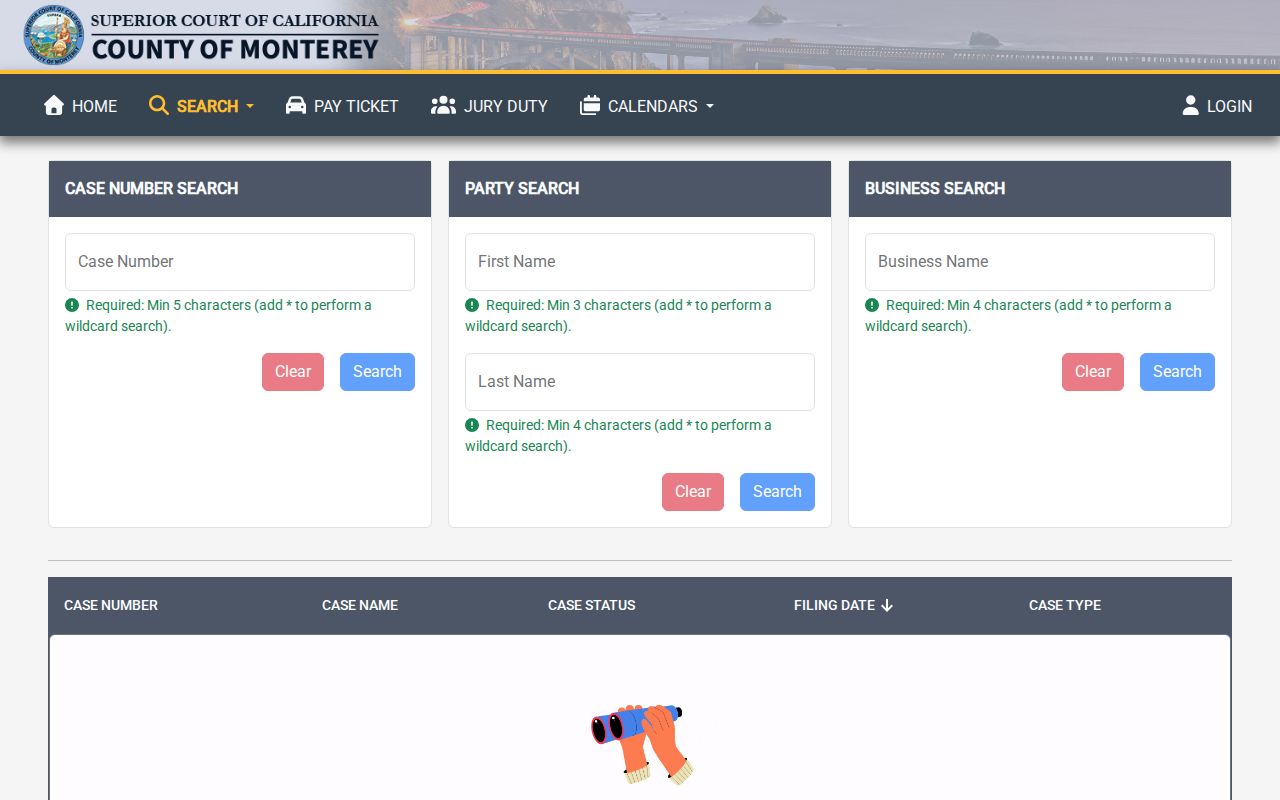
That court search is useful for confirming a case role or identity variant, not for proving a current home address. The broader in-person terminal, clerk search, mail request, and historical-file channels matter when a remote result is absent.
| Portal field | Minimum | Search note | What a result provides |
|---|---|---|---|
| Case Number | 5 characters | Use the known case identifier; wildcard is available. | Case number, name, status, filing date, and type |
| First Name | 3 characters | Test spelling and asterisk variants when permitted. | Matching case parties and case details subject to remote rules |
| Last Name | 4 characters | Use a narrow surname and confirm the case context. | Party or case-name matches |
| Business Name | 4 characters | Useful when the record names an entity instead of a person. | Business-linked cases and case status |
Monterey Voter Status and Resident Privacy
California My Voter Status is an authenticated self-lookup, not a public resident directory. The match uses first and last name, date of birth, and a California driver's license or identification number or the last four digits of a Social Security number. It can return registration status, party preference, county, polling or ballot information, and election details for the person checking their own record. Protected voters are excluded from public files.
A broader voter file follows a different channel. Monterey County's application asks for the requester, organization, intended use, security steps, extract geography, delivery method, and specific voter or voting-history choices. Processing is generally 2-3 business days, with the price quoted after the request. Contact is available through 831-796-1499 or MCEData@countyofmonterey.gov. State and county files are limited to qualified purposes under Elections Code §§2188, 2194, and the historical registers at the library represent limited electorates rather than a population census.
The official My Voter Status form shown below is a self-service check, not a public-name index.
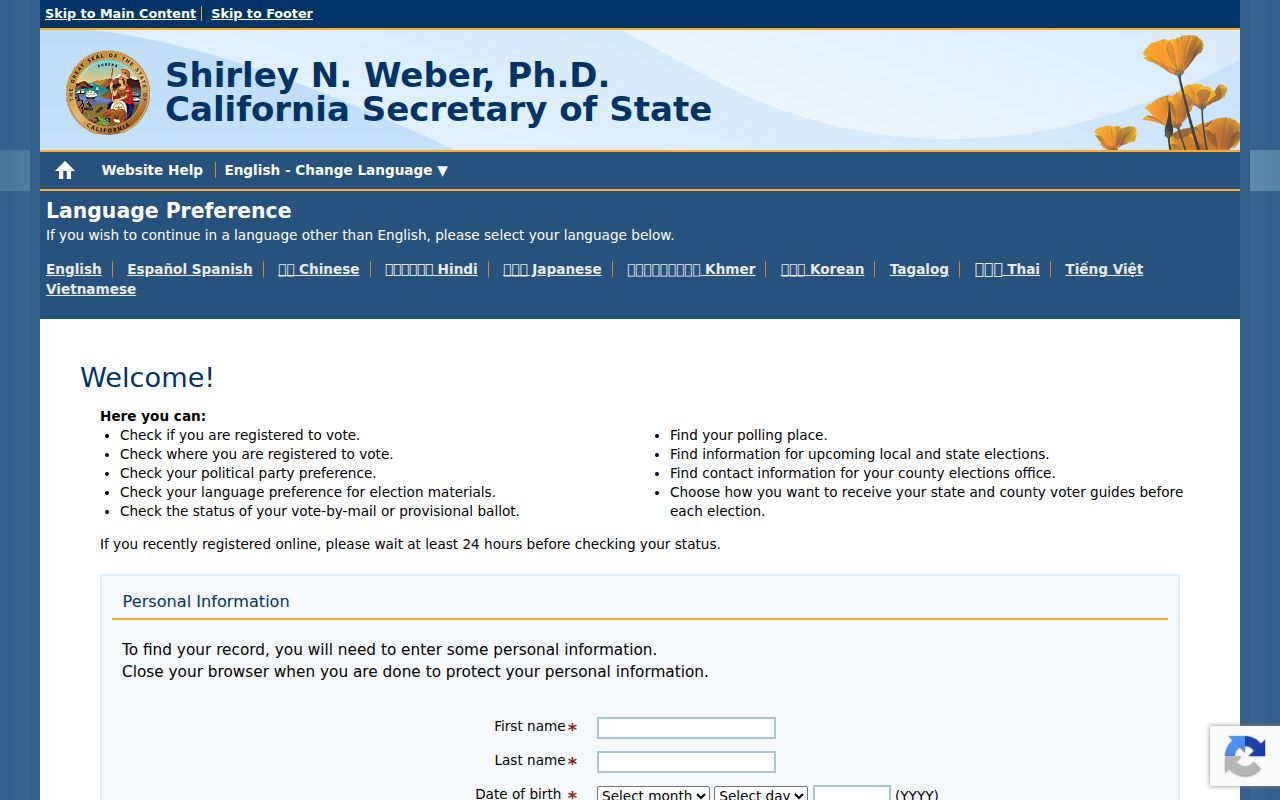
That distinction keeps an authenticated personal check separate from a qualified-purpose file request. It also explains why a missing voter result cannot be treated as evidence that a person never lived in Monterey.
Monterey Vital-Record Lookup Paths
Vital records split by event age and record type. Monterey County Health, at 1270 Natividad Road on the second floor in Salinas, holds the current year plus one prior year of births and deaths. The counter is open Monday through Friday from 8:30 to 4:30, closing noon to 1, at 831-755-4504. In-person orders can be while-you-wait and accept cash, check, or card. Older county births and deaths move to the Recorder at 168 West Alisal Street or PO Box 29, while county marriage records also route through the Recorder. The state CDPH is the statewide custodian.
For 2026, the county fees are $31 for a birth certificate, $26 for a death certificate, and $19 for a marriage certificate. California separates authorized certified copies from informational certified copies under Health and Safety Code section 103526. Mailed authorized-copy applications need a notarized sworn statement and payment by check or money order; in-person applicants sign before staff with photo identification. Confidential marriage copies have separate limits. There is no modern open name index for ordinary Monterey vital events, so an application, library finding aid, or obituary may be the first step, not a public search box.
Divorce decrees come from the Superior Court rather than Health or the Recorder. CDPH's limited divorce Certificate of Record covers 1962-June 1984 and is not the decree. Historical indexes can help identify an event, but only the proper custodian can issue a certified copy.
Monterey City Records and CPRA
City-level records add civic, permit, property-jacket, cemetery, and business context that county rolls do not. The City Clerk's I-SEARCH portal lets a researcher choose Document Type, enter a term in an indexed field, and use exact text or an asterisk wildcard such as *jeff* or 123*. It indexes legal, fiscal, and historical records, but the dynamic document-type options and coverage dates were not exposed in the research capture. Historical ordinances and resolutions may also have been amended.
The Monterey City I-SEARCH portal is the online starting point for a municipal record trail.
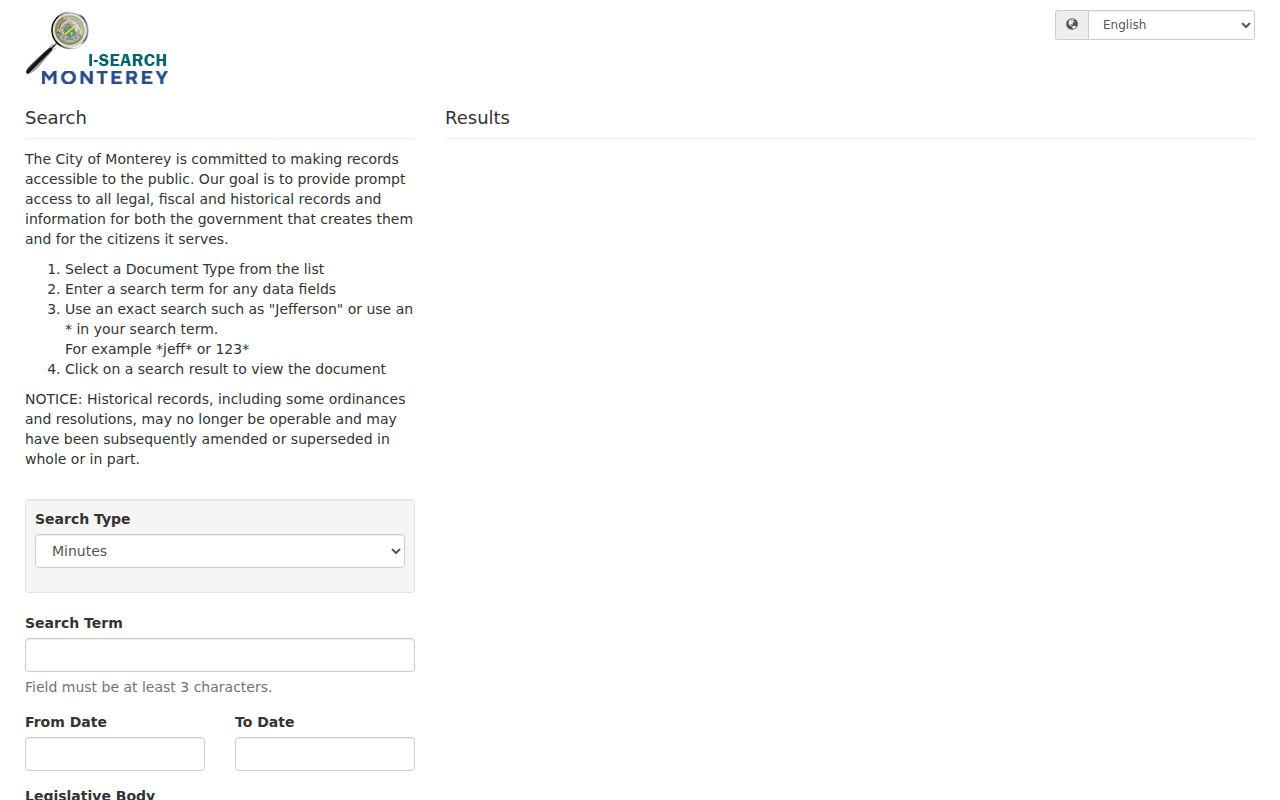
I-SEARCH results can point toward the City Clerk at Few Memorial Hall, 580 Pacific Street, Room 6, 831-646-3935. Requests can be made by phone or in writing, and a secure drop box is opposite the Council Chamber ADA entrance. For permits, the Permit Center and Building and Planning counter is at 580 Pacific Street, Room 1, 831-646-3799. The MyMonterey portal is account-oriented, so historic research may require a property jacket, a Planning address file, or a narrow records request.
California's Public Records Act, or CPRA, supplies the fallback when a useful series is not online. Describe the record, address or name variants, date range, custodian, and desired electronic format. An agency ordinarily makes an initial disclosure determination within 10 calendar days, with a written unusual-circumstances extension of up to 14 days. Inspection is generally free; duplication may be charged at direct cost. The CPRA deadline statute is the best reference for that timing.
Monterey Historical Directory Shelves
The historical Monterey residents directory is a dated record of printed listings, not a single continuous roll. The California History Room holds city directories from 1905-1987, Haines reverse directories from 1970-current, telephone directories from 1906 and 1943-current, voting registers for 1867, 1879, and 1890, census material through 1950, Sanborn maps from 1885-1962, and newspapers from 1846-2001. A directory year can place an adult at an address, show a spouse or listed occupation, and suggest when a household moved, but omissions and gaps are part of the source.
Use the Monterey city directories collection for the full shelf-by-shelf treatment. For a short search, the strongest sequence is a reverse directory for an address, an alphabetical name entry, a nearby year, and a second source such as census, newspaper, deed, or Sanborn map.
Monterey Library Directory Years
The library's Polk run is unusually specific. The California History Room lists Polk's Monterey Peninsula directory: including Monterey, Carmel, Del Rey Oaks, Pacific Grove, Sand City and Seaside, R. L. Polk & Co., call number 917.9476 POL[K]. Verified holdings include 1926, 1930, 1937, 1939, 1941, 1947, 1949, 1951, 1953, 1954/55, and 1956-1987 except 1961, 1983/84, and 1986. Pacific Grove Library reportedly holds 1885 and 1933. Early county business directories include 1875, 1877, 1882-83, and 1889.
Haines, call number 917.9476 HAI, turns an address into a listed occupant from 1970-current and later adds reverse phone material. Telephone books cover 1906 and 1943-current. The shelf also includes Sanborn editions and corrections such as 1888, 1892, 1905, 1912, 1924, 1926, 1936, 1943, 1956, and 1962, plus newspapers and obituary files. Ask for the exact volume, reverse section, abbreviation key, and whether a gap is a missing volume or a missing entry.
The California History Room genealogy collection ties those printed directories to census, newspaper, map, and register holdings.
The library image represents a finding-aid route, not a claim that every directory has been digitized. The room is appointment and noncirculating oriented, so a researcher should request a targeted name, address, and year before making a visit.
Monterey Business and License Records
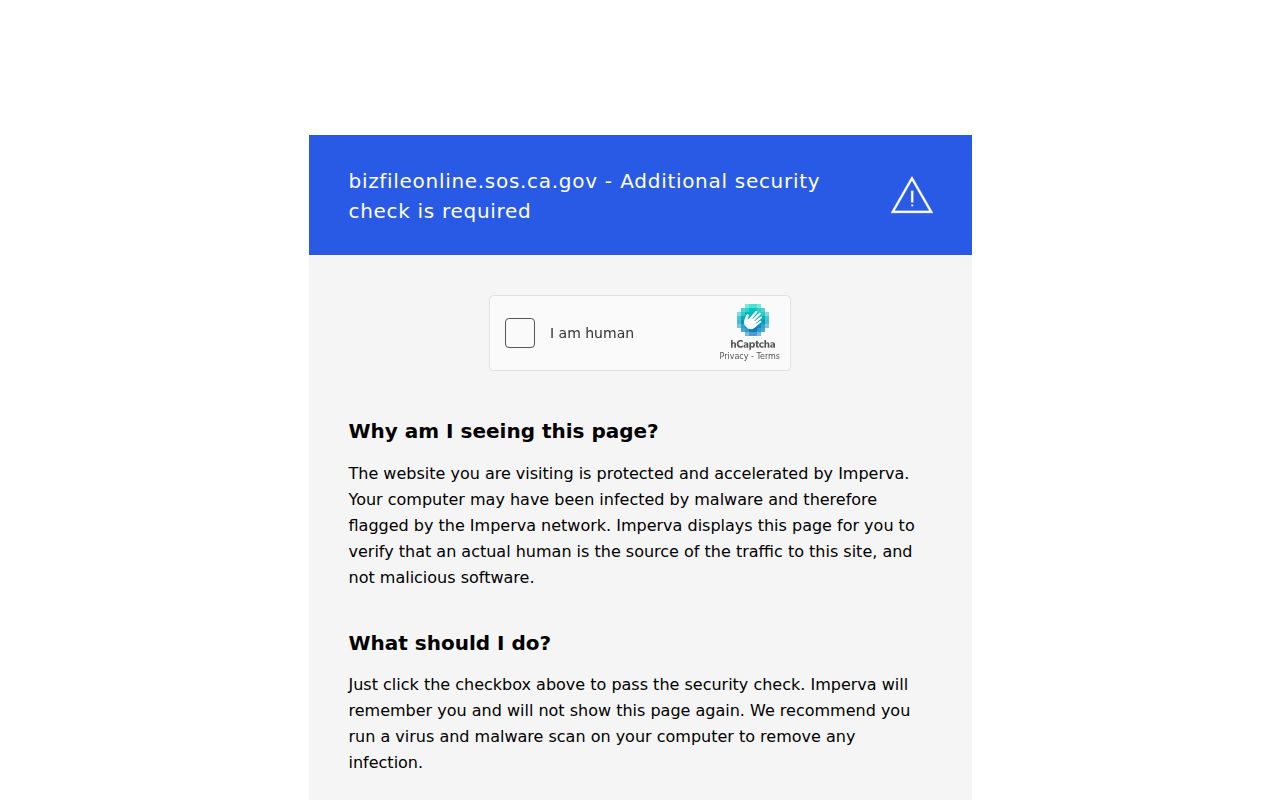
Some resident questions are really affiliation questions. California Secretary of State bizfile Online can return an entity name and number, registration date, status, jurisdiction, type, principal or mailing address, agent, Statements of Information, and filing history. A principal or agent address is an address of record for an entity, not proof of a person's home. Monterey County fictitious business name filings and City Finance license files are separate local channels. City Finance has no verified public license roster, so a direct inquiry or CPRA request may be needed.
The California Secretary of State business search is useful for testing a name, entity, or trade-name lead.
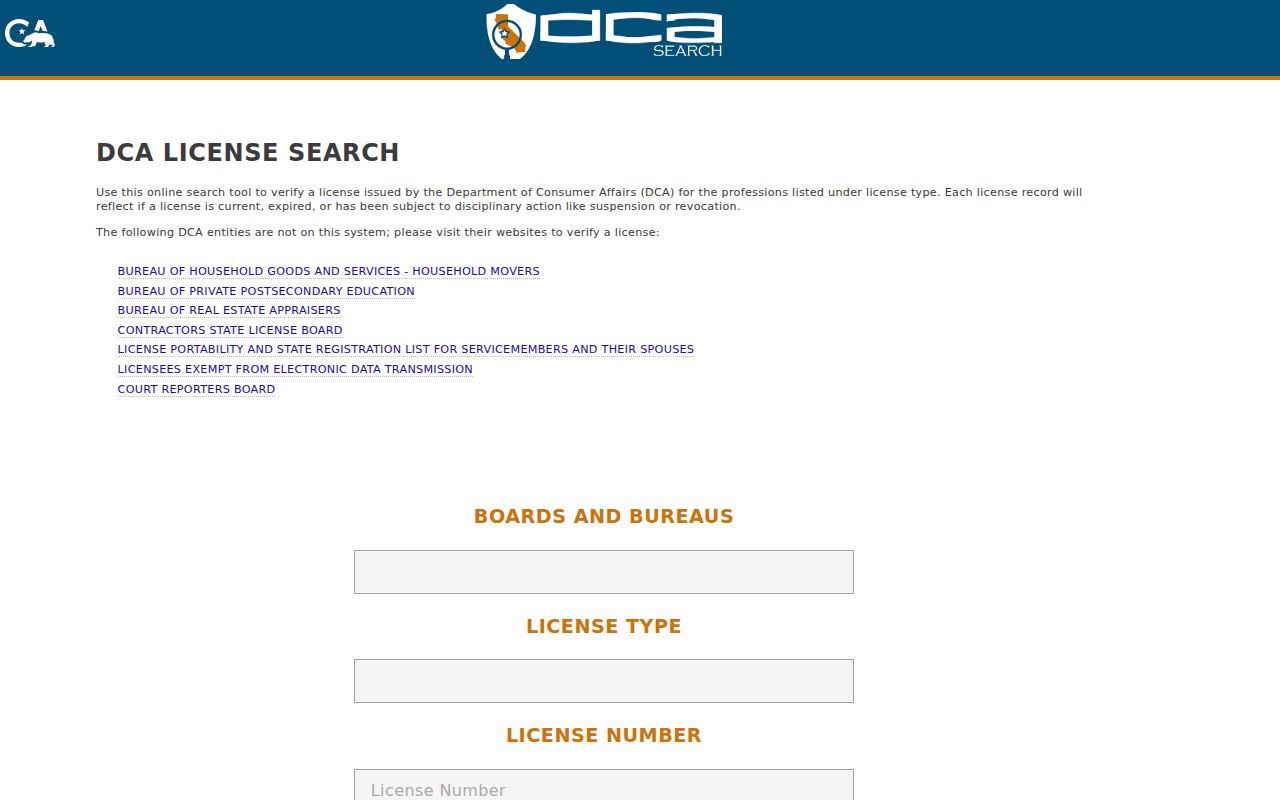
Business filings establish an entity relationship and a filing history. They do not convert an office, service-company, or mailing address into a resident address. Document orders from the Secretary of State may cost money, while an index or detail view can be free. California DCA License Search provides another narrow affiliation check. Its fields include Board or Bureau, License Type, License Number, Business Name, First Name, Last Name, City, County, and ZIP. A detail may show licensee, number, type, status, expiration, address of record, and public disciplinary documents. The California DCA license search image shows that field pattern.
These records help confirm a role, business connection, or dated public filing. They belong beside a Monterey resident lookup, not in place of an address, court, deed, directory, or vital record.
Monterey ZIP and Address Directory Clues
USPS associates Monterey with four ZIP codes, but postal geography is not the same as city jurisdiction. ZIP 93940 uses the Monterey Post Office at 565 Hartnell Street and the Cannery Row station at 686 Lighthouse Avenue. ZIP 93942 is associated with Monterey, although an exact station and PO-box-only status were not located officially. ZIP 93943 is tied to the U.S. Naval Postgraduate School at 151 North Street, and ZIP 93944 serves the Presidio of Monterey at 1712 Private Bolio Road.
The official USPS modes are ZIP by Address and ZIPs by City and State. A ZIP result does not confirm that a person or company resides at an address. The GIS Parcel Report's City/Jurisdiction field and the NCIP map are better checks for municipal boundaries. New Monterey and Cannery Row are also physically separated from the city core by the Presidio, creating a real city and federal geography break. The Monterey ZIP directory handles the ZIP-by-ZIP details.
- Resident roll
- A list made for one purpose, such as voter registration or taxation; it is not a complete population roster.
- Index
- A finding aid that points to a record, party, document number, or location; it is not always the legal record itself.
- Criss-cross directory
- A reverse directory that starts with an address and points toward a listed occupant or phone entry.
- Parcel and APN
- A parcel is a mapped land unit; its APN connects GIS, Assessor, Recorder, and legal-description clues.
- Situs address
- The physical location of land or a structure, which may differ from where mail is sent.
- Legal description
- The recorded land identity, often more stable than street text when an address changes.
Monterey Resident Address Privacy
Public-record research has legal and human limits. California Safe at Home offers a confidential substitute mailing address and mail forwarding for qualifying survivors of domestic violence, stalking, sexual assault, human trafficking, elder or dependent-adult abuse, and qualifying reproductive-health participants. It is an address-confidentiality program, not an Internet eraser. Existing copies, unrelated web pages, or records held by another custodian may remain.
California privacy rules also affect how a result is handled. The CCPA and CPRA give covered-business rights to know or access, delete, correct, opt out of sale or sharing, limit sensitive-data use, and avoid discrimination. California DROP opened to consumers on January 1, 2026, with registered brokers beginning centralized deletion processing on August 1, 2026. Until a covered business processes a request, use its own privacy channel, send only needed verification, keep the confirmation, and recheck later.
Recorded-document SSN truncation and redaction can address public images under Government Code section 27300 and related provisions, but a preserved original may remain with limited access. A missing online address is not proof that the underlying record never existed. The source's use terms and confidentiality rules control the next step.
Monterey Records Before 1850
Monterey's resident record trail predates Monterey County's county books. The county was organized in 1850 as one of California's original 27 counties, while Spanish and Mexican records came earlier. Monterey was California's first capital and hosted the 1849 constitutional convention. The Monterey County Historical Society holds early material in the Robert B. Johnston Archival Vault, including Spanish military correspondence mainly from the 1780s, Mexican land-grant petitions, civil and criminal court material, immigration and military files, early-1850s county records, ranch maps, and nineteenth-century photographs.
For a person connected to an early Monterey family, land grant, adobe, institution, or business, the regional archive can be more useful than a modern name lookup. The Monterey County historical-archives directory helps identify a repository when the California History Room lacks a run. The Monterey History and Architecture Association (MHAA) advanced index can search an exact last name with role, building, organization, location, topic, publication, or notes. Its Noticias index covers 166 issues from 1957-2009, and Peninsula Diary includes 2,529 searchable Herald columns.
That early trail calls for careful source matching. A land petition, newspaper notice, directory listing, voting register, census entry, or deed may illuminate one part of a life, but each has its own date, purpose, and omission pattern. Keep the record date and custodian with every finding.