
Monterey ZIP Codes and Their Service Areas
USPS ties Monterey to four ZIP codes. None of them maps onto a plain residential district. One covers the main routing area for the city's everyday mail. One carries a station and PO-box status the official record leaves unstated. The other two belong to major institutional sites. A postal match tells you mail goes somewhere. It does not prove a person or firm sits at that address. Monterey County GIS adds the other half of the picture through its City/Jurisdiction field. Read the postal result and the legal geography side by side. Filter a residents directory by ZIP only after that.
| ZIP Code | Areas Covered | Post Office | Notes |
|---|---|---|---|
| 93940 | Monterey PO and Cannery Row service points | Monterey PO, 565 Hartnell Street | 93940-9998; Cannery Row Station, 686 Lighthouse Avenue, 93940-9997 |
| 93942 | USPS associates it with Monterey | Not officially located in the research | Station and PO-box status remain unconfirmed |
| 93943 | Naval Postgraduate School, 151 North Street | NPS station/address | Institutional ZIP, 93943-5286 |
| 93944 | Presidio of Monterey, 1712 Private Bolio Road, Room 517A | Presidio station | Institutional ZIP, 93944-3206 |
The table also explains why a ZIP directory is not a resident roster. The Naval Postgraduate School and Presidio entries are institutional delivery geographies. The 93940 entries mark official postal locations. The 93942 entry needs an address-level check rather than an assumed station. No citywide ZIP realignment year appears in county or postal sources. No portal returns every person using a given code. A code is a route, not a roster.
For where a specific address is routed, the official USPS ZIP Code Lookup is the best starting point. Save the returned ZIP and ZIP+4 beside the address.
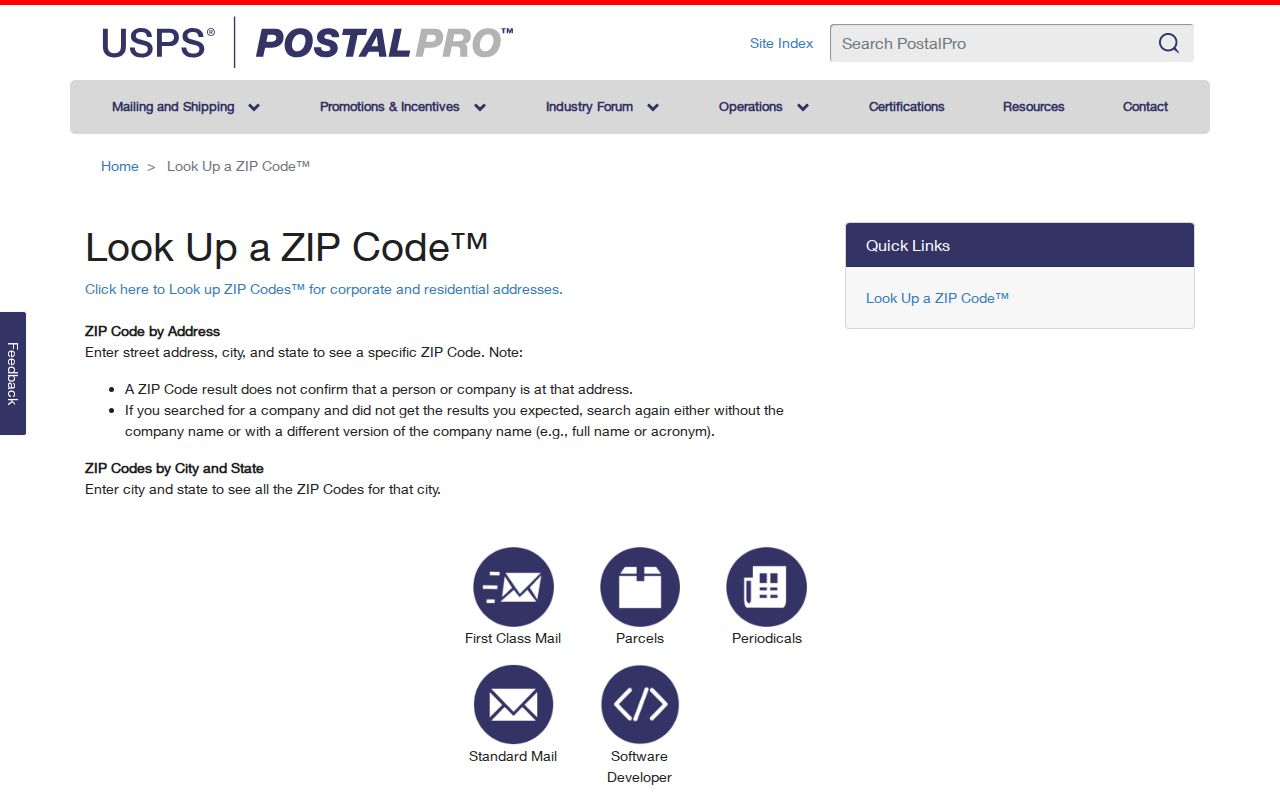
The lookup settles postal assignment and nothing else. Occupancy, ownership, and the identity behind a name move to county, court, library, or election records, each with its own access rules.
Monterey 93940: PO and Cannery Row
93940 is Monterey's principal general-delivery city ZIP. USPS lists the Monterey Post Office at 565 Hartnell Street under the ZIP+4 form 93940-9998. Cannery Row has its own station at 686 Lighthouse Avenue, using 93940-9997. Those two reference points help with an old envelope, directory entry, or family paper. Use them when a record names Monterey without a full street match. Neither one lists who receives mail there.
Run the complete street, city, and state through address mode before deciding which station matters. Keep the returned ZIP and ZIP+4. If the address sits near New Monterey, Cannery Row, or a county map boundary, compare the postal result with the parcel's jurisdiction. A mailing city may run wider than the city limits. A station name is not a legal address. It describes the delivery path, not the place where a person legally lives.
The USPS Monterey Post Office listing gives the official station reference for Hartnell Street. It is the one used in the 93940 record. Confirm the postal location there. Then return to the address record.
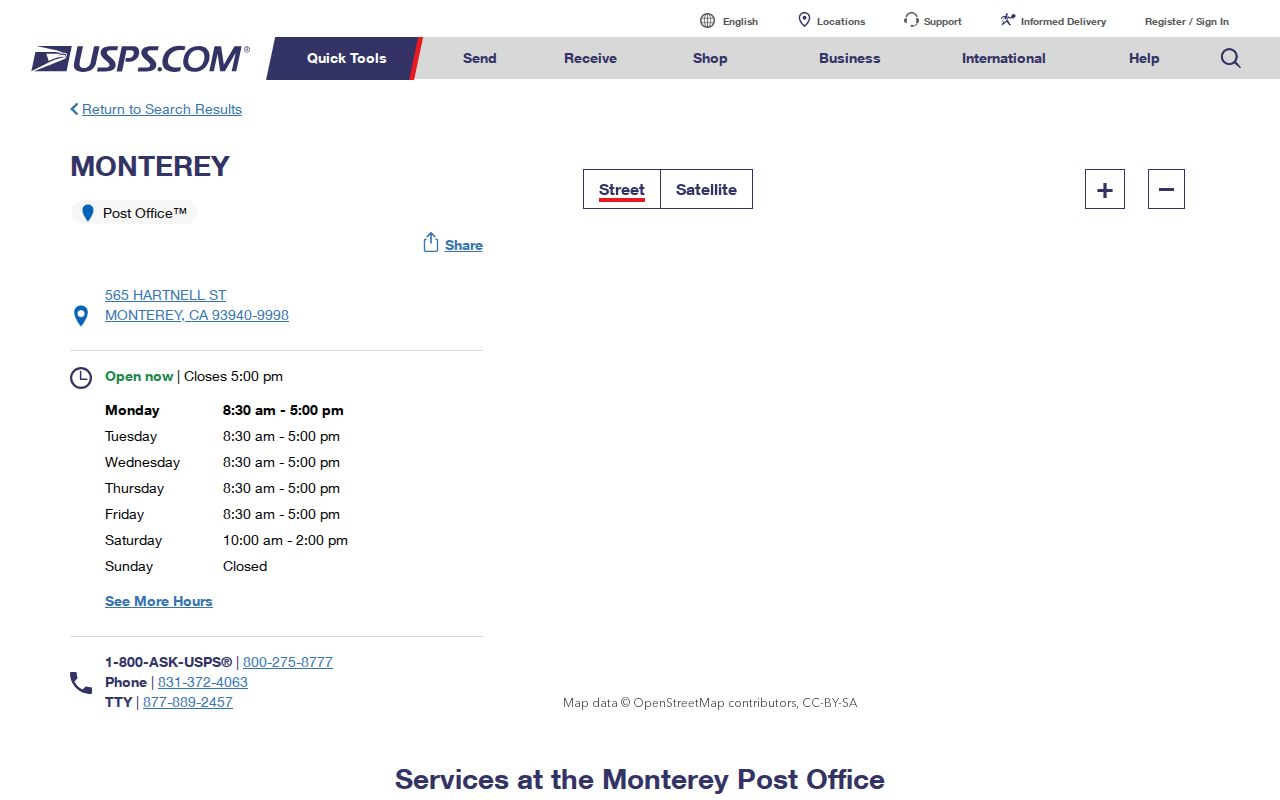
Verify the postal location with the station detail. That is where USPS stops. Ownership, parcel history, and resident questions return to county records and their own access rules.
Note: A 93940 routing result identifies mail geography, not every household, owner, or named recipient connected with the address.
Monterey 93943: Naval Postgraduate School
93943 belongs to the U.S. Naval Postgraduate School at 151 North Street, recorded as ZIP+4 form 93943-5286. The setting matters. A unique ZIP serves one facility, not a neighborhood grid. A postal entry here is a delivery clue for the campus. It is not a promise of a public resident list. No roster covers the people assigned, studying, serving, or receiving mail there.
When a historical record shows 93943, keep the name and address exactly as printed. Then ask what the record concerns. It might name a person, an office, or a campus unit. It might even sit on a parcel outside the expected city line. The county GIS viewer offers parcel and jurisdiction clues. The USPS address lookup confirms routing. Neither proves a named individual occupies an institutional address. For family history or reconnection work, pair the ZIP with a dated directory. A newspaper item or official record can also tie the person to the address.
This institutional ZIP blocks a common shortcut. Sorting every 93943 result as a household is a mistake. Campus mail brings organizations, departments, and facility addresses into a ZIP-filtered set. Pull those rows into a separate category. Then compare them with residential entries on their own terms.
Monterey 93944: Presidio Geography
ZIP 93944 belongs to an institution rather than a neighborhood. The Presidio of Monterey claims it, with mail routed through 1712 Private Bolio Road, Room 517A, under the full code 93944-3206. Geography gives this ZIP its weight. The Presidio sits as a physical wedge between New Monterey and Cannery Row on one side and the city core on the other. So a letter postmarked Monterey can actually point inside a federal installation, a land-use world apart from the municipal street grid.
The official NCIP neighborhood map shows both the federal and civilian areas side by side while keeping the boundary honest. NCIP representatives serve as civic contacts. They are not a household directory. For any 93944 question, let USPS speak first. Then read the county GIS City/Jurisdiction and parcel fields. Only after that should you pick a record custodian. The Presidio label can guide a search toward the right offices, but it cannot reveal whether a name on a document lived on post, served there, or merely carried a connection to the installation.
That caution matters most with old directories, court files, and family letters that list Monterey as the mailing city. Copy the institutional address exactly as written, room notation and all. Never quietly convert it into an ordinary residential address. A postal code can stay fixed for decades while assignments, campuses, and federal records shift around it.
Monterey 93942: An Unlocated Station
USPS ties 93942 to Monterey, yet the agency publishes no station detail for it. No official source says whether the route serves street delivery or boxes only. State the gap plainly. The association itself is documented. The service details are not. Inventing a post office, assigning a neighborhood, or calling it a box-only route would only corrupt the record.
Start with the USPS ZIPs by City and State mode to confirm the Monterey association still holds. Then run ZIP by Address for a specific street, city, and state. Keep those two results apart in your notes. A city-level association is one fact. A single address match is another. If the address also turns up in a Monterey County Parcel Report, line up the APN, legal description, and City/Jurisdiction fields for comparison. A matching ZIP and parcel can anchor a location link nicely. Still, that link names no occupants. It cannot prove a particular person receives mail at the address.
Note: An unresolved station record is a reason to verify the address directly, not permission to treat 93942 as a hidden resident roll.
Finding Monterey Residents by ZIP Code
Treat a ZIP-keyed search as a staged location check. One broad resident query will not carry you far. USPS verifies the postal assignment first. Monterey County Parcel Report then locates an address or APN, exposing parcel, document, district, and jurisdiction clues along the way. The assessor works differently, accepting an APN or assessment number in place of any public owner-name search. California voter tools are narrower still. My Voter Status authenticates a person's own registration, and the larger voter file demands a qualified purpose plus an application. Each channel describes a different slice of one postal area.
- Verify the full street, city, and state in USPS ZIP by Address. If the question is only which codes are associated with Monterey, use ZIPs by City and State instead.
- Locate the address in Monterey County Parcel Report. Save the APN, legal description, current or creating document clues, and City/Jurisdiction field.
- Enter the APN or assessment number in Monterey County Property Value Notice. Read ownership, parcel status, values, exemptions, or characteristics as enrolled property evidence, not proof of occupancy.
- Use My Voter Status only for the person signing in. For a qualified-purpose county or statewide file, submit the required application, identity documents, purpose details, geography, and secure-delivery choice.
- For older occupants, move from the ZIP to the Monterey Public Library’s directories, reverse Haines volumes, telephone books, census sources, newspapers, and obituaries. Keep the year beside every result.
No official portal lists every resident of 93940, 93942, 93943, or 93944. GIS selection can sketch an area's shape. But the open layer leaves out owner and mailing-address fields. A ZIP narrows the question and nothing more. It cannot replace the address, APN, document number, or record year. Nor can it supply the custodian a verified person or property trail requires. Once the search settles on a named street, the Monterey by-street records walkthrough picks up the address chain from there.
Practical limit. A postal match is a routing result. It cannot confirm that a named person or company resides at the address, and it cannot turn a parcel selection into a complete household list.
Monterey ZIP Search Fields and Limits
The USPS search modes each answer a different question. The address mode tests one delivery point. The city-and-state mode lists every ZIP code tied to a place name. Neither mode works as a name search. USPS states plainly that a ZIP result does not confirm a named person or company at an address. That boundary matters for anyone using the Monterey County residents directory. A ZIP code alone narrows a street but never identifies who lives there.
| Field Label | Input / Type | Required | Format or Limit |
|---|---|---|---|
| ZIP by Address | Street address, city, state | All address fields | Returns postal ZIP; no person or company confirmation |
| ZIPs by City and State | City and state | Both fields | Shows ZIP associations, including Monterey’s four researched entries |
| ZIP+4 result | Generated result | Not applicable | Narrows delivery detail; does not establish residence |
| Parcel Report address | Address or place locator | Address or place query | Autocomplete returns at most six suggestions |
| Parcel Report parcel | APN or APN_FORMAT | Parcel query | Partial matching returns at most six suggestions |
| GIS selection | Point, line, rectangle, circle, polygon, or freehand shape | Draw a shape | Intersects parcels; 2,000-record cap; no owner or mailing fields |
County tools follow their own field logic. The Parcel Report locator takes an address or place, with autocomplete capped at six suggestions. It also takes an APN and formatted APN, with partial matching under the same six-result limit. Selection tools let you draw a point, line, rectangle, circle, polygon, or freehand shape. The service caps results at 2,000 records. The open parcel layer displays APN, acreage, values, and legal description. Subdivision, jurisdiction, zoning, and district fields appear as well. Owner and mailing address are absent. The assessor's free lookup wants a 12-digit fee parcel number. It also accepts at least six partial digits, or an assessment number. It is not a ZIP-wide owner directory.
Note: A ZIP-capable field can narrow postal geography, while a county field can identify a parcel; neither field alone proves who lives there.
ZIP Boundaries Versus Monterey City Limits
ZIP lines exist for mail routing. City limits exist for legal jurisdiction. The two can overlap without ever matching. A Monterey mailing city may reach past the incorporated boundary, and a federal installation can wear a Monterey postal label while sitting in its own jurisdictional world. That mismatch is exactly why the county GIS City/Jurisdiction field earns its keep. A deed, permit, court record, or neighborhood reference all land in the right office only when jurisdiction is checked, not assumed.
NCIP neighborhood names enrich the local picture but redraw no postal lines. The official map covers civilian areas such as New Monterey, Monterey Vista, Old Town, and Del Monte Beach alongside the federal and Naval areas. Committee representatives are civic contacts, not a household roster. When a 93940, 93943, or 93944 address seems to sit on the wrong side of a local boundary, compare the postal lookup, the GIS jurisdiction, the parcel legal description, and the responsible custodian. Resist the urge to bend an address to fit a map label.
- ZIP code
- A five-digit postal routing area used to sort and deliver mail; it is not a municipal boundary or resident roll.
- ZIP+4
- The five-digit ZIP followed by four more digits that narrows delivery to a smaller route, building, or delivery segment.
- PO-box ZIP
- A postal code used mainly for post-office boxes or a station’s box service; the 93942 status was not officially located here.
- Unique ZIP
- A code associated with one institution, facility, or major delivery point rather than a broad residential area.
- Carrier route
- A delivery grouping used within postal operations; it is finer than a ZIP and is not a public list of the people on the route.
Monterey ZIP Records: Situs, Mailing Address, APN
Four address terms decide whether a Monterey ZIP search lands on the right record. A situs address marks the ground where a parcel physically sits. A mailing address shows where correspondence goes, and it can differ from the situs entirely. A legal description is the recorded land identity, durable enough to survive a street renaming or renumbering. The APN, or assessor's parcel number, is the county's identifier for that parcel, tying together GIS layers, assessment rolls, and recorded documents.
Monterey County's public systems keep those distinctions visible. A Parcel Report can list the APN, legal description, subdivision, city or jurisdiction, zoning, districts, and current or creating document numbers. The assessor's Property Value Notice accepts an APN or assessment number and may show ownership, parcel status, assessed values, exemptions, and characteristics. The open GIS layer omits owner and mailing-address fields. The assessor offers no public browse by owner name, so the parcel is the doorway, not the resident. And a parcel owner is not always the occupant.
Useful record trail: postal address → GIS APN and jurisdiction → assessor facts → recorder document number and deed parties → dated directory, census, or other occupancy evidence.
That chain matters most for 93944 and 93943, where one institutional address can stand for an entire campus or federal facility. It also untangles 93940 records that lean on a station, a room, or an older mailing label. Treat the ZIP as one field in your notes, never as a substitute for the legal description or APN.
Monterey ZIP Records Beyond the Portal
A postal result answers the routing question and leaves the resident question open. Monterey then sends you across several custodians. The right fallback depends on your goal. Are you chasing parcel identity, a recorded transaction, a qualified voter extract, an old directory listing, a permit file, or a person-specific court or vital record? No single ZIP search combines all those categories.
- Postal verification: USPS supplies the address and city-state lookup modes and the station references for 93940, 93943, and 93944. Use the online result and the named station addresses as separate evidence.
- Parcel and assessment: GIS is free and map-based. The assessor offers APN or assessment lookup, paid characteristics and map reports, counter help at 831-755-5035, and records shaped by privacy limits.
- Recorded land documents: Monterey County Recorder indexes run from 1978 to the present and historically from 1850 to 1977. Search online, visit 168 West Alisal Street in Salinas, call 831-755-5041 or 831-647-7741 for the Peninsula, or mail a request to PO Box 29 with the document number or reel/page, year, exact indexed party, and document type. Copies are $2 per page, with certification at $2 per document.
- Voter records: California My Voter Status is an authenticated self-check. A qualified county file uses an application through Elections, with purpose, geography, security, and identity details; contact is 831-796-1499 or MCEData@montereycounty.gov. Delivery can be a secure thumb drive or download, and the county quotes the price after review.
- Historical and municipal files: the Monterey Public Library genealogy collection supplies directories, reverse directories, telephone books, census sources, voting registers, newspapers, maps, and obituary material. Permit Center staff, property jackets, Planning address files, and a narrow California Public Records Act request provide the fallback when an online municipal portal does not expose a usable historic search.
The MyMonterey permit portal is built around accounts. Anonymous historic searching is not part of its design. Treat it as a channel marker for permit records, not as evidence that a ZIP-wide permit index exists anywhere.

For an address-specific permit question, go to the Monterey City Permit Center at 580 Pacific Street, Room 1. You can also call 831-646-3799. Ask about a property jacket, or make a narrow request naming the address and the record type.
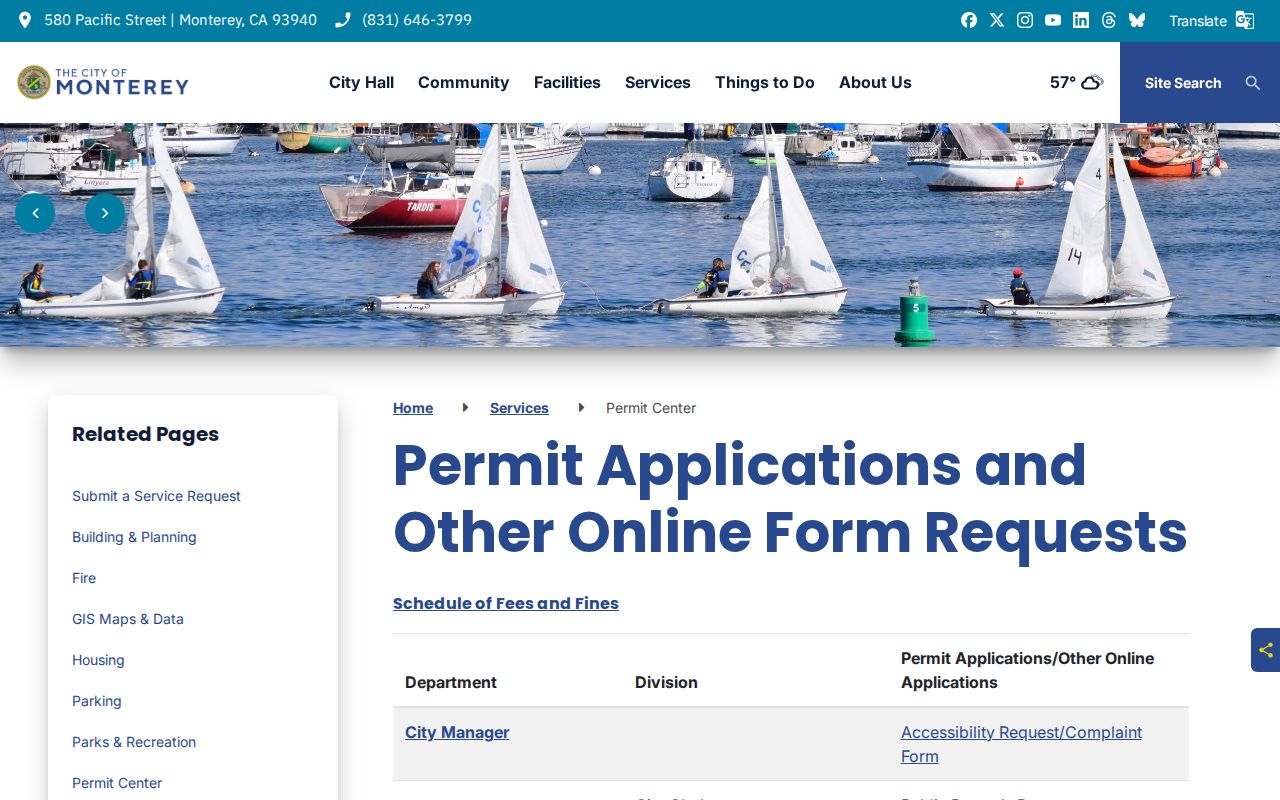
The permit counter is an address channel, not a resident roster. A person-specific question points elsewhere. The Monterey Superior Court Public Portal, courthouse terminals, and CI-115 mail or counter requests are one path. The separate County Vital Records channels are another. Modern vital records have no official open statewide name index. Access depends on record age, copy type, and eligibility. A careful ZIP directory therefore ends with a custodian. It also ends with a dated query and a plainly stated limit.
Note: When the web display stops, the counter, phone, mail, library, archive, or records-request channel may still answer a narrower question.